
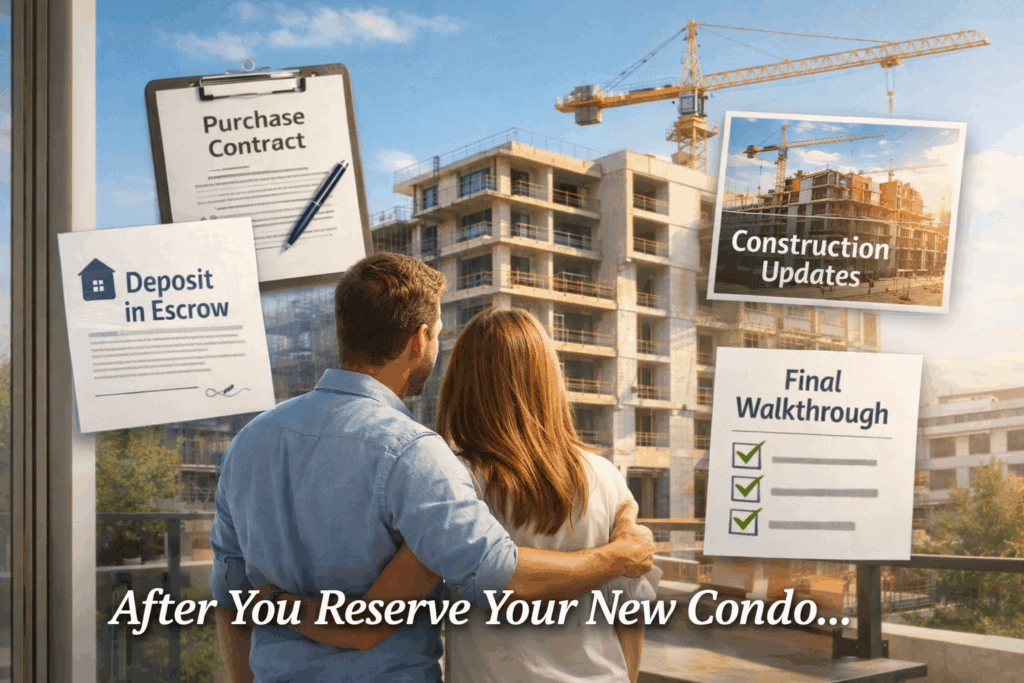
Reserving a new construction condo is an exciting step, but for many buyers, it’s also where uncertainty begins.
Once the reservation is placed and the unit is taken off the market, buyers often ask the same question: what actually happens next? The process is very different from buying a resale property, and understanding the steps early helps set expectations and reduce stress.
Here’s what typically happens after you reserve a new construction condo in Florida.
Step One: Reservation Is Converted Into a Contract
A reservation is not the final purchase agreement. It’s a temporary hold that gives both the buyer and developer time to move toward a formal contract.
After reserving, the developer will prepare the purchase agreement and condominium documents. This usually happens within a defined timeframe, often a few days to a few weeks, depending on the project.
At this stage, pricing, unit selection, and basic terms are confirmed, but the deal is not fully binding yet.
Step Two: Contract Review and Execution
Once the contract is issued, buyers are given time to review it carefully. This includes the purchase agreement, disclosures, condo declaration, and other required documents.
Florida law provides buyers with rescission periods, which allow them to cancel within a short window after receiving documents. This is one of the most important moments in the process, as it’s when buyers can still walk away without penalty.
This is also when buyers should fully understand:
- Deposit structure and timing
- Delivery estimates
- What happens if construction is delayed
- Rental and use restrictions
Once the contract is signed and rescission periods expire, the purchase becomes binding.
Step Three: Deposits Are Made According to the Schedule
After the contract is finalized, deposits are made according to the schedule outlined in the agreement. These deposits are typically held in escrow and released based on construction milestones.
Unlike resale transactions, deposits in new construction are structured to support the development process. They are not meant to be flexible and are usually non-refundable once rescission periods have passed, unless specific contractual conditions are triggered.
Understanding the timing and purpose of each deposit is critical before committing.
Step Four: Construction Progress and Updates
Once under contract, buyers enter the longest phase of the process: construction.
During this period, buyers may receive periodic updates, photos, or milestone notices from the developer. Progress can feel slow at times, especially in the early stages, but this is normal for large-scale developments.
Timelines provided at the time of purchase are estimates. Delays can happen due to weather, inspections, supply chains, or permitting. What matters most is consistent progress and transparency.
Step Five: Pre-Closing Preparation
As the building nears completion, buyers will be notified that the project is moving into its final stages.
This is when buyers should:
- Finalize financing, if applicable
- Prepare remaining funds for closing
- Review updated closing statements
- Confirm ownership structure and use plans
For buyers using financing, lenders will typically re-underwrite closer to delivery rather than at the time of reservation.
Step Six: Final Walkthrough and Closing
Before closing, buyers are usually given the opportunity to complete a final walkthrough of their residence. This allows them to confirm finishes, appliances, and overall condition.
Once the walkthrough is complete and documents are finalized, the transaction moves to closing. At that point, ownership transfers and the buyer officially takes possession of the unit.
This closing process differs from resale closings and often involves more documentation and coordination.
Why Understanding the Process Matters
Most buyer frustration in new construction comes from misaligned expectations, not the process itself.
New construction is slower, more structured, and more document-heavy than resale purchases. But it also offers benefits like modern construction, warranties, and the ability to plan ownership well in advance.
Knowing what happens after reservation helps buyers stay confident and prepared at every stage.
The Takeaway for Buyers
Reserving a new construction condo is the beginning of a longer journey, not the end of the decision-making process.
Understanding how contracts, deposits, construction timelines, and closing actually work allows buyers to move forward with clarity instead of uncertainty.
Considering reserving a new construction condo and want to understand the process before committing?
Condos Global helps buyers walk through each step—from reservation to closing—so there are no surprises along the way.
FAQs
Is a reservation legally binding
No. A reservation holds the unit temporarily but becomes binding only once the purchase contract is signed and rescission periods expire.
Can I cancel after reserving a unit
Yes, but only within the rescission periods defined by Florida law and the contract. After that, deposits are usually non-refundable.
How long does construction usually take
Timelines vary by project, but most new construction condos take multiple years from reservation to delivery.
When should I apply for financing
Most buyers apply closer to delivery, not at the time of reservation, unless advised otherwise by their lender